
Background check report delays can derail your hiring process, making it harder to fill critical...


As we look ahead to 2026, compliance remains a moving target for employers, especially those operating in highly regulated industries. From evolving regulations to rising fraud risks and increased scrutiny of hiring practices, staying compliant requires ongoing review.
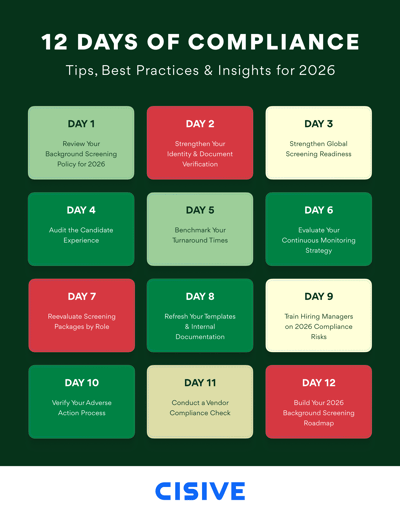
That’s why we launched our 12 Days of Compliance campaign. Over 12 days, we’ve shared practical tips, best practices, and checkpoints designed to help HR and talent acquisition teams strengthen their background screening programs and prepare for the year ahead.
Below is a recap of each day, along with guidance on how each tip fits into a comprehensive 2026 compliance strategy.
An annual policy review is the foundation of a compliant screening program. As regulations and enforcement priorities change, policies that once worked may no longer be sufficient.
Taking time to review your background screening policy helps ensure alignment with current federal, state, and local requirements, as well as internal risk tolerance and hiring practices. A well-documented policy also provides consistency across teams and locations.
Day 1 Resource: Review Your Background Screening Policy for 2026
As candidate fraud continues to rise, identity and document verification play a critical role in protecting your workforce.
Employers should confirm that I-9 processes align with current DHS guidance, remote verification solutions remain compliant, and identity checks are applied consistently across all locations. Addressing these areas early helps prevent red flags before onboarding begins.
Day 2 Resources:
Hiring across borders introduces additional complexity, from country-specific regulations to data privacy considerations.
Strengthening global screening readiness means understanding local requirements, working with experienced partners, and ensuring your screening process scales compliantly as your workforce grows. A proactive approach helps reduce risk while supporting global hiring goals.
Day 3 Resource: Global Compliance Solutions: Background Checks Explained
Compliance and candidate experience go hand in hand. A confusing or overly complex screening process can create frustration for candidates and increase the risk of errors.
Auditing the candidate experience includes reviewing how candidates complete legally required disclosures, authorizations, and forms. Reducing friction while maintaining compliance helps protect your employer brand and keeps hiring moving forward.
Day 4 Resource: 9 Essential Practices to Improve Job Candidate Experience
Turnaround time affects more than hiring speed. It also impacts compliance timelines tied to adverse action notices and required waiting periods.
Benchmarking your screening turnaround times against industry norms, labor market conditions, and seasonal fluctuations helps you identify delays early. This visibility allows you to take corrective action before offers stall or compliance deadlines are missed.
Day 5 Resource: Why Do Background Checks Take So Long? (Hint: They Don't Have To)
For many regulated employers, compliance does not end once a candidate is hired.
Evaluating your continuous monitoring strategy can help identify post-hire changes that may impact eligibility, safety, or job requirements. This is especially important in healthcare, transportation, and other safety-sensitive industries where ongoing oversight is critical.
Day 6 Resource: What Is Ongoing Monitoring? Tips, Best Practices, & More
Using a one-size-fits-all screening package can create unnecessary risk or inefficiencies.
Reevaluating screening packages by role ensures that safety-sensitive, healthcare, transportation, and global positions receive appropriate checks aligned with job requirements. Right-sized packages help eliminate blind spots and support compliant decision-making.
Day 7 Resource: How to Conduct a Background Check
Outdated templates can introduce compliance gaps and slow down the hiring process.
Refreshing consent forms, disclosures, authorization language, and adverse action notices ensures your documentation reflects current requirements. Clear and compliant forms help prevent disputes and keep hiring workflows consistent.
Day 8 Resource: Review Your Background Screening Policy for 2026
Hiring managers play a critical role in compliant hiring, but compliance updates can be easy to miss.
Providing short, targeted refreshers on topics like individualized assessments, FCRA guidelines, ban-the-box rules, and other legal updates helps reduce risk. Ongoing education helps eliminate blind spots across the hiring process.
Day 9 Resource: Training Hiring Managers on 2026 Compliance Risks
Adverse action is one of the most time-sensitive and highly regulated parts of background screening.
Verifying your process includes reviewing pre-adverse and final adverse action timing, notice templates, and state-specific requirements. A consistent and compliant approach helps protect your organization and supports fair hiring decisions.
Day 10 Resource: Adverse Action Explained for Talent Management
Your compliance posture is only as strong as the vendors supporting your hiring process.
Conducting a vendor compliance check means reviewing ATS workflows, integrations, data transfer security, and service-level agreements. Ensuring your vendor ecosystem aligns with compliance expectations helps reduce risk across your screening program.
Day 11 Resource: 6 Vendor Compliance Screening Questions That Will Reduce Your Risk in 2026
After reviewing each of these areas, the final step is bringing everything together into a clear roadmap.
A 2026 background screening roadmap outlines key priorities, quarterly reviews, training plans, and process improvements. This proactive approach helps you stay ahead of regulatory changes, reduce risk, and hire with confidence throughout the year.
Compliance is not a single task. It is an ongoing process that evolves alongside regulations, workforce needs, and risk factors.
By revisiting these 12 areas and building a structured roadmap for 2026, you can strengthen your background screening program and stay prepared for what lies ahead. Cisive is proud to support your organization as a proactive partner, helping you eliminate blind spots and make compliant hiring decisions.
Speak with a Cisive pro to review your current background screening program, identify potential compliance gaps, and build a 2026 roadmap designed to help you hire with confidence.
Author: Jenni Gallaway
Bio: Content Marketing Manager at Cisive. 8 years of experience in the background screening industry.
Let's Connect on LinkedIn
Background check report delays can derail your hiring process, making it harder to fill critical...

What are reference checks? Reference checking is the process of a potential employer contacting the...

Did you know that only 17% of employers screen their employees at least annually? However, with the...